

Vitamin B12 Supplement Guide Benefits Dosage and Types
You might already know that Vitamin B12 is the spark plug for your body’s entire cellular engine…
Part of the q'ankyaq Gut Health Hub — explore the complete guide.
But what you might not know is how easily that engine can quietly grind to a halt.
If you’ve been fighting off a weird layer of daily brain fog, dealing with stubborn chronic fatigue, or trying to figure out if your plant-based diet is missing a critical piece of the puzzle, you aren’t alone. The reality is that a Vitamin B12 deficiency is incredibly common, frustratingly sneaky, and frequently missed until your energy tank is completely empty.
Choosing the right high-potency cobalamin dietary supplement isn't just about grabbing the first bottle you see on the shelf.
It comes down to understanding the real science: knowing the difference between synthetic cyanocobalamin and highly bioavailable methylcobalamin, bypassing digestion barriers like low intrinsic factor, and finding the exact delivery method—whether it's premium capsules or quick-absorbing best sublingual B12 drops—that fits your body's specific blueprint.
At q'ankyaq, we believe in cut-the-nonsense nutrition that actually gets absorbed.
In this ultimate guide, you’re going to learn exactly how to spot the warning signs of low B12, decode supplement labels like a pro, and reclaim your natural baseline of clean, sustainable cellular energy and metabolism.
Let's dive right in.
The Anatomy of a Deficiency: Are You Running on Empty?
Ever feel like you are dragging yourself through the day despite getting a full night's sleep? You might wonder if you are just stressed, but the real culprit could be a low-key vitamin b12 supplement deficiency. Because our bodies cannot make this essential nutrient, we rely entirely on what we take in. When those levels dip, your physical and mental battery drains fast.
The Warning Signs
A drop in B12 does not happen overnight, but when it hits, the red flags are hard to ignore. Many people mistake these indicators for everyday burnout. Keep an eye out for these common vitamin b12 deficiency symptoms:
- Chronic fatigue and brain fog relief becomes a constant search as mental clarity plummets.
- Unexplained mood shifts and irritability.
- A smooth, thick-feeling, or swollen tongue.
- Muscle weakness and a total lack of physical stamina.
Megaloblastic Anemia & Nerve Health
When a deficiency turns severe, it compromises your biology on a cellular level, specifically targeting your b-complex nervous system health.
- Signs of Low Red Blood Cells: Without enough B12, your body struggles to produce normal red blood cells. Instead, it creates oversized, underdeveloped cells that cannot leave the bone marrow. This condition, known as megaloblastic anemia, starves your tissues of oxygen and leaves you perpetually exhausted.
- Neurological Damage: B12 preserves the myelin sheath—the protective coating around your nerves. When this shield degrades, you will experience a distinct "pins and needles" tingling sensation in your hands and feet. Left unchecked, it can lead to permanent nerve damage and balance issues.
How Long Does It Take to Show?
Unlike other water-soluble vitamins absorption processes where excess leaves the body daily, your liver actually stores a massive reserve of B12. Because the body recycles its existing stash so efficiently, it typically takes 3 to 5 years of zero B12 intake for a true deficiency to surface. However, once those deep reserves are completely depleted, the symptoms hit hard and fast. Waiting for the crash is a massive gamble; proactive support is the only way to keep your cellular energy and metabolism firing at 100%.
High-Risk Groups: Who Needs a Vitamin B12 Supplement Most?
Not everyone processes nutrients the same way. While some people get enough nutrients from their diet, specific groups face severe absorption hurdles. For these individuals, adding a high-quality vitamin b12 supplement to their daily routine isn't just an option—it is a necessity to prevent chronic fatigue and brain fog relief.
The Plant-Based Community
Vitamin B12 is found naturally almost exclusively in animal products. If you follow a strict vegan or vegetarian diet, your risk of depletion is incredibly high.
- The Issue: Plant foods lack reliable forms of cobalamin.
- The Solution: A reliable daily B12 dosage for vegans is crucial to maintain cellular energy and metabolism.
The Aging Gut
As the body ages, the stomach produces less gastric acid. This decline directly impacts how nutrients are broken down and utilized.
- At-Risk Demographics: Adults over the age of 50.
- The Mechanism: Lower stomach acid means the body cannot detach B12 from food proteins, making highly bioavailable B12 for elderly populations a top health priority. To support overall vitality and metabolic function during these structural changes, incorporating targeted thyroid supplement liquid drops for women can provide comprehensive endocrine support.
Gastrointestinal Obstacles
Your gut must be functioning perfectly to absorb B12 through traditional digestion. When the digestive tract is compromised, absorption rates plummet.
- Pernicious Anemia: An autoimmune condition where the body lacks intrinsic factor stomach acid dependencies required to process B12.
- Digestive Disorders: Conditions like Celiac disease, Crohn’s disease, or past gastric bypass surgeries bypass the natural absorption pathways entirely.
Medication Interferences
Several common over-the-counter and prescription medications actively deplete your body's B12 stores over time.
| Medication Type | Common Uses | Impact on B12 |
|---|---|---|
| Metformin | Blood sugar management | Interferes with B12 absorption in the ileum. |
| PPIs (Proton Pump Inhibitors) | Acid reflux & heartburn | Lowers stomach acid, blocking nutrient separation. |
| H2 Blockers | Indigestion relief | Reduces the production of essential stomach acids. |
Methylcobalamin vs. Cyanocobalamin: Decoding Vitamin B12 Supplement Labels
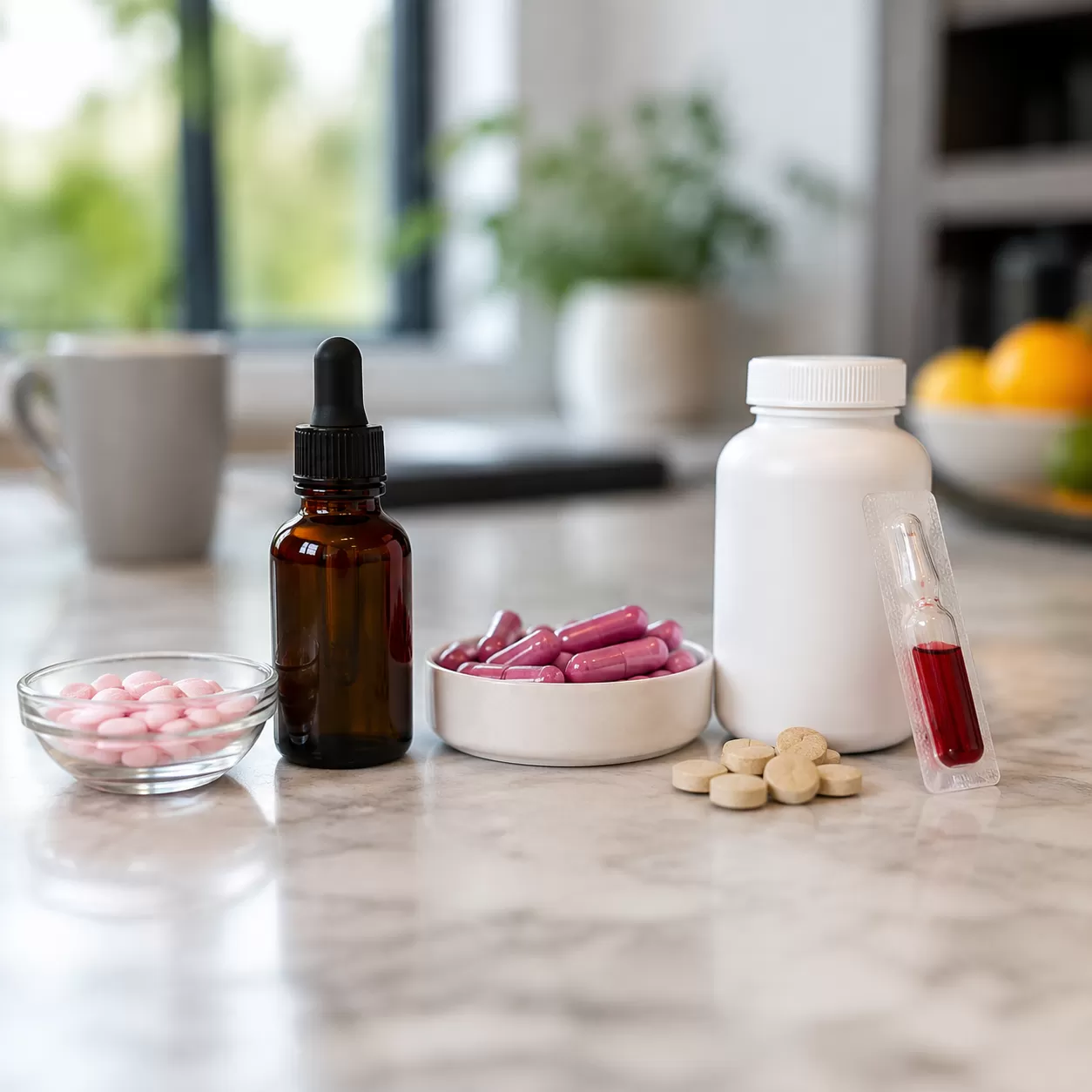
When picking a vitamin b12 supplement, the sheer number of scientific names on the ingredient list can be overwhelming. Understanding the differences between these forms ensures you choose a product that your body can actually use efficiently.
Cyanocobalamin: The Synthetic Standard
Cyanocobalamin is a synthetic form of vitamin B12 that does not occur naturally in the human body. Because it is highly stable and cost-effective to manufacture, it is the most common form found in standard over-the-counter supplements. However, your body cannot use cyanocobalamin as-is. Once ingested, your system must expend energy to convert it into an active form, stripping away a molecule of cyanide in the process. While the amount of cyanide is technically harmless, this multi-step conversion process makes it less efficient for quick absorption.
Methylcobalamin: The Bioactive Form
If you want a more direct route to cellular energy and metabolism, look for methylcobalamin. This is a naturally occurring, bioactive form of vitamin B12. Because it is already coenzymated, your body bypasses the complex conversion steps required by synthetic alternatives.
- Better Retention: Research indicates that methylcobalamin is retained in tissue longer and excreted less rapidly in urine than cyanocobalamin.
- Nervous System Health: It interacts directly with metabolic pathways, making it highly effective for supporting a healthy B-complex nervous system health routine.
Adenosylcobalamin and Hydroxocobalamin
Beyond the two primary forms, you might occasionally spot adenosylcobalamin or hydroxocobalamin on premium labels.
- Adenosylcobalamin: This is another natural, active form of B12 that works specifically within the mitochondria—the powerhouses of your cells—to drive cellular energy production.
- Hydroxocobalamin: Commonly used in heavy-duty clinical settings, this natural form easily converts into both methylcobalamin and adenosylcobalamin inside the body, offering a highly versatile and long-lasting option.
The q'ankyaq Standard
We do not believe in taking shortcuts with synthetic fillers or cheap ingredients that force your body to do extra work. The q'ankyaq standard is built strictly around clean, bioavailable nutrients that align with natural human physiology. We prioritize naturally active, coenzymated forms like methylcobalamin to ensure maximum absorption right from the moment you take it. Our formulas are designed for real, everyday results—giving your body exactly what it needs without the chemical conversions.
Demystifying the Numbers: Recommended Dosages vs. Supplement Strengths
Navigating the numbers on a vitamin b12 supplement label can be incredibly confusing. You will often see a massive gap between what your body technically needs daily and the mega-doses packed into over-the-counter bottles. Understanding how your body processes this nutrient is key to picking the right strength.
The Dietary Baseline
The standard daily recommended intake for a healthy adult is surprisingly small—just 2.4 micrograms (mcg). This baseline is enough to prevent deficiency symptoms, support cellular energy and metabolism, and maintain basic B-complex nervous system health. However, this baseline assumes your digestive system is functioning at 100% efficiency, which is rarely the case for everyone.
The Absorption Bottleneck
Why do standard supplements contain 1,000 mcg or even 5,000 mcg if the daily requirement is so low? It all comes down to a physiological bottleneck involving intrinsic factor and stomach acid.
Your body relies on a specialized protein called intrinsic factor to absorb B12. However, this system caps out at absorbing only about 1.5 to 2 mcg per meal. Anything beyond that relies on passive diffusion, which is highly inefficient.
| Supplement Dose | Estimated Absorption Rate | Actual Amount Absorbed |
|---|---|---|
| 2.4 mcg (Food/Low Dose) | ~50% | ~1.2 mcg |
| 500 mcg (Standard Pill) | ~1% | ~5 mcg |
| 1,000 mcg (High-Potency) | ~0.5% - 1% | ~5 to 10 mcg |
Because of this steep drop-off, high-potency cobalamin dietary supplements are engineered with massive doses just to ensure your body successfully forces a tiny, usable fraction into your bloodstream.
Is There a Safe Upper Limit?
The good news is that B12 belongs to the family of water-soluble vitamins, meaning your body does not store dangerous excesses like it does with fat-soluble vitamins.
- No Upper Limit: The Food and Nutrition Board has not established a safe upper intake level of B12 because clinical trials show no adverse side effects from large doses.
- Natural Flushing: Whatever your liver cannot store or your cells cannot use is simply flushed out through your urine.
- When to Go High: If you are managing severe lethargy or looking for chronic fatigue and brain fog relief, starting with a higher strength (like 1,000 mcg to 2,500 mcg) is a safe and effective way to bypass absorption roadblocks.
Delivery Methods: Picking the Right Vitamin B12 Supplement
When you are looking for the best way to reverse chronic fatigue and brain fog relief, how you take your cobalamin matters. The market is flooded with options, but your body absorbs them differently.
Traditional Capsules
Standard oral pills and capsules are the most common over-the-counter options. However, they rely heavily on your digestive system. For your body to use a capsule, it needs sufficient intrinsic factor stomach acid to split the vitamin away from the protein. If your gut health is compromised, traditional pills often pass right through you with very little absorption, making them less effective for rapid cellular energy and metabolism support.
Sublingual Drops & Intranasal Sprays
If you want over-the-counter B12 injection alternatives, sublingual drops and nasal sprays are the premier choice. Best sublingual B12 drops bypass the digestive tract entirely. By holding the liquid under your tongue, the nutrients enter your bloodstream directly through the mucosal membranes.
This delivery method is perfect for individuals who want fast-acting results without dealing with the discomfort of needles or the absorption barriers of the stomach. To keep your overall stamina high, keeping your muscles firing efficiently is just as important as cellular energy. Adding specialized nutrients like HMB and L-Leucine gummies for muscle energy to your daily routine can complement your B12 intake by preventing muscle waste and maintaining physical strength.
When Are Injections Necessary?
Direct muscle injections are typically reserved for severe clinical cases. If a medical professional diagnoses you with advanced pernicious anemia treatment needs or extreme neurological damage, shots ensure a 100% absorption rate. However, for daily maintenance, premium sublingual drops offer a non-invasive, highly bioavailable alternative that fits seamlessly into a busy lifestyle.
The q'ankyaq Checklist: How to Pick a Premium Vitamin B12 Supplement
Finding a high-quality vitamin b12 supplement shouldn't feel like guesswork. When we formulate our wellness products at q'ankyaq, we follow a strict set of quality standards to ensure max potency and safety.
Use this checklist to evaluate any B12 supplement before buying:
Clean Label Purity
- Zero Fillers: Avoid products loaded with unnecessary binders, artificial colors, or chemical preservatives.
- Allergen-Free: Look for formulas that are strictly non-GMO, gluten-free, and vegan-friendly.
- Liquid Advantages: High-potency cobalamin dietary supplements in liquid form often eliminate the need for the synthetic glues used to hold traditional tablets together.
Third-Party Verification
- Independent Testing: Never rely solely on a brand's word. A premium brand always uses independent, third-party laboratories to test for heavy metals, purity, and exact potency.
- Safety Assurance: This verification guarantees that what is printed on the label matches exactly what is inside the bottle.
Synergistic Formulation
- Co-Factors matter: Vitamin B12 works best when paired with complementary nutrients that aid cellular energy and metabolism.
- B-Complex Integration: A well-rounded formula often supports overall B-complex nervous system health, ensuring your body absorbs and utilizes the vitamin efficiently rather than letting it go to waste.
What the regulators say
“The FDA does not approve dietary supplements for safety and effectiveness before they reach the market.”
Reference point: The NIH ODS sets the tolerable upper intake level for zinc at 40 mg per day for adults. (NIH ODS)
For the reference values and safety ceilings cited above, verify against the NIH Office of Dietary Supplements and the U.S. FDA. Neither body endorses any specific brand.
Related Articles
Related Products
Clinically-formulated q'ankyaq supplements to support your goals.


Oregano Oil with Black Seed Oil Organic Gummies for Kids and Adults with Immune Support


