
Sulforaphane Sources Broccoli Sprouts and Cruciferous Vegetables
You’ve probably heard that cruciferous vegetables like broccoli and kale are elite health foods. But there’s a massive catch: the most powerful molecule inside them doesn't actually exist until you change the way you prep them.
Part of the q'ankyaq Gut-Brain Axis Hub — explore the complete guide.
That molecule is sulforaphane, a potent compound that triggers Nrf2 pathway activation—your body's ultimate internal defense system for cellular health and antioxidants.
But if you are just tossing broccoli into a steamer basket or swallowing basic heat-treated supplements, you are likely missing out on its benefits. Typical cooking entirely destroys myrosinase enzyme activation, the biological trigger needed to turn the inactive glucoraphanin precursor into active, health-boosting sulforaphane.
If you want to unlock the full potential of these plants, you need to know exactly where to find the highest concentrations and how to prepare them. Hint: broccoli sprouts are the undisputed champions, packing up to 100 times more of the essential precursor than mature heads.
At Q‘ankyaq, we believe in maximizing functional nutrition through smart, effortless adjustments. Here is exactly how to optimize sulforaphane bioavailability, rank the best isothiocyanates in food, and use simple cooking hacks for cruciferous vegetables to get the absolute most out of every single bite.
If you have been looking into ways to boost your cellular health, you have likely run into the buzzword sulforaphane. But what actually is it, and why is everyone in the wellness space talking about it? Let's clear up the confusion and look at what this powerhouse compound does for your body.
What is Sulforaphane?
Sulforaphane is a natural, sulfur-rich compound found in cruciferous vegetables like broccoli, Brussels sprouts, and kale. It belongs to a group of plant chemicals called isothiocyanates in food. Think of it as a biological trigger. Once inside your system, it kickstarts your body's natural defense mechanisms, acting as a massive spark plug for cellular health and antioxidants.
In our wellness philosophy, true vitality starts at the absolute foundation: your cells. We believe in supporting systemic cellular health by giving the body the raw materials it needs to repair, defend, and detoxify itself naturally, rather than relying on synthetic quick fixes.
Why It Does Not Exist Inside Intact Vegetables
Here is the twist that surprises most people: intact vegetables contain zero sulforaphane.
If you look at a perfectly whole, undamaged head of broccoli, the sulforaphane simply isn't there yet. Instead, the plant stores two separate components in different parts of its cells:
- Glucoraphanin precursor: A quiet, inactive compound (a glucosinolate).
- Myrosinase enzyme: The microscopic "key" that unlocks the precursor.
As long as the vegetable is whole, these two never meet. The plant keeps them separated as a brilliant survival strategy. Sulforaphane is only created when the plant is attacked, crushed, or chewed, bringing the precursor and the enzyme together to form the active compound.
| Plant State | Chemical Condition | Sulforaphane Content |
|---|---|---|
| Whole / Untouched | Precursor and enzyme are separated | Zero |
| Chopped, Chewed, or Blended | Chemical reaction occurs | Maximum Activation |
The Core Takeaway: To actually get the health benefits of sulforaphane sources, you cannot just swallow cruciferous veggies whole. You have to break the plant cells open to trigger the chemical reaction.
How Sulforaphane Is Activated
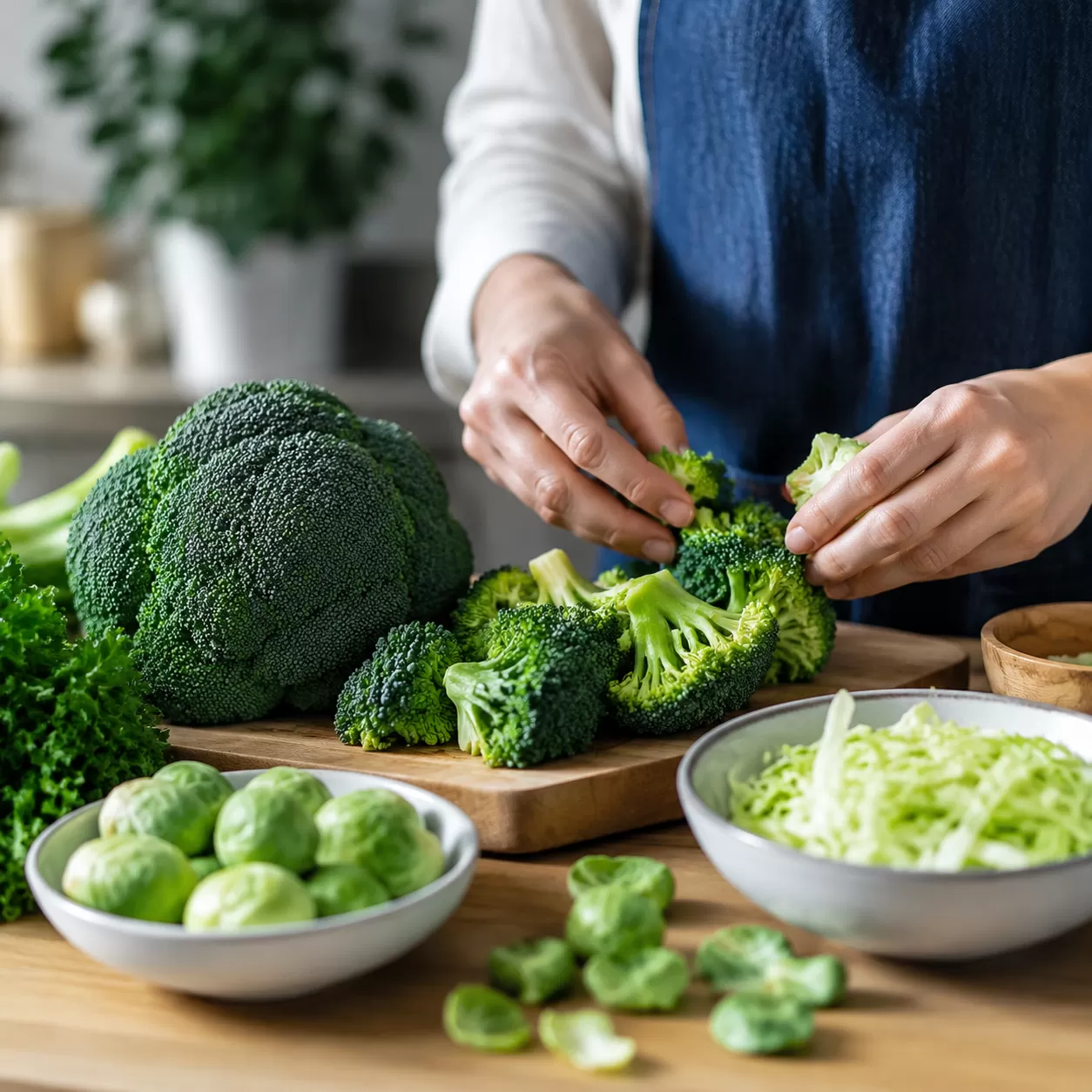
Sulforaphane does not actually exist inside an intact veggie. It requires a chemical reaction triggered by structural damage—like chopping, chewing, or blending. Think of it as a binary plant defense mechanism designed to ward off pests.
The Dynamic Duo: Glucoraphanin and Myrosinase
Inside the plant cells, two distinct components are kept separate: glucoraphanin (the precursor compound) and myrosinase (the active enzyme). When you bite or slice the vegetable, these cellular walls rupture, allowing the myrosinase enzyme activation to convert glucoraphanin into potent isothiocyanates in food, specifically active sulforaphane.
- Glucoraphanin: The stable, inactive storage molecule.
- Myrosinase: The biological spark plug that triggers the transformation.
- The Result: A surge of cellular health and antioxidants ready for your body to absorb.
Why Extreme Heat Destroys the Enzyme
The biggest mistake people make with cruciferous vegetables is overcooking them. The myrosinase enzyme is highly heat-sensitive. High temperatures—like boiling, microwaving, or heavy roasting—completely denature and destroy this fragile protein before it can create any sulforaphane.
Without the active enzyme, eating raw vs cooked broccoli yields vastly different nutritional results. If you cook the vegetable instantly, the precursor remains completely trapped and inactive, passing through your system without delivering its core cellular benefits. If you are preparing meals for your family and want to skip the kitchen guesswork, a clean liquid format like our kids sulforaphane supplement broccoli sprout extract liquid provides a reliable, fully activated dose of this powerful compound without any heat degradation.
Why Broccoli Sprouts Reign Supreme
When it comes to packing a punch for your cellular health, broccoli sprouts are the undisputed champions of the green world. While mature cruciferous vegetables like head broccoli, kale, and cabbage are excellent for your diet, they simply cannot compete with the sheer potency of these young microgreens.
Sprouts vs. Mature Veggies: The Glucoraphanin Comparison
The secret to the power of broccoli sprouts lies in their concentration of glucoraphanin, the essential precursor needed to create sulforaphane. During the first few days of growth, these tiny sprouts hold a dense reservoir of protective compounds that dilute as the plant grows larger.
- Potency Boost: Broccoli sprouts contain up to 10 to 100 times more glucoraphanin by weight than a mature head of broccoli.
- Efficiency: Eating just a small handful of sprouts delivers the same cellular health and antioxidant benefits as eating multiple pounds of full-grown vegetables.
- Less Bloating: You get a massive dose of active phytochemicals without the heavy fiber load that sometimes causes digestive discomfort from large portions of mature brassicas.
The Cost-Effective Superfood Benefits of Young Microgreens
Growing or buying broccoli sprouts is one of the most budget-friendly ways to optimize your daily wellness routine. They offer an incredibly high return on investment for your health, acting as a natural spark for liver detox foods and systemic purification pathways.
| Feature | Broccoli Sprouts | Mature Broccoli |
|---|---|---|
| Glucoraphanin Levels | Extremely High (Peak concentration) | Moderate to Low (Diluted) |
| Preparation Time | None (Eaten raw) | Requires careful cooking to save enzymes |
| Cost per Nutrient Dose | Very Low | Higher (Requires large volume) |
Choosing these young microgreens means you are getting a premium, bioavailable dose of sulforaphane sources without spending a fortune at the grocery store. They are affordable, incredibly easy to add to sandwiches or smoothies, and stand as the ultimate shortcut to maximizing your daily intake of protective isothiocyanates.
Top Dietary Sources of Sulforaphane
When it comes to packing your diet with isothiocyanates in food, not all cruciferous vegetables are created equal. While many greens offer incredible cellular health and antioxidants, the concentration of their active precursors varies wildly. To get the absolute most out of your meals, you need to know which veggies deliver the highest payload of glucoraphanin.
Here is the breakdown of the top sulforaphane sources you should be adding to your grocery list.
Broccoli Sprouts and Microgreens
Broccoli sprouts are the undisputed heavyweight champions of the green world. These tiny 3-to-4-day-old microgreens contain up to 50 times the concentration of sulforaphane precursors found in mature broccoli heads. Eating just a small handful of these raw sprouts gives you the same cellular health benefits as eating an entire bucket of full-grown broccoli. They are, hands down, the most potent and cost-effective liver detox foods available.
Brussels Sprouts Concentration
If you prefer mature vegetables, Brussels sprouts are your next best bet. They rank incredibly high in overall glucosinolates in cruciferous vegetables. When sliced thinly into a raw slaw or gently prepared to preserve the myrosinase enzyme activation, Brussels sprouts provide a massive, bioavailable dose of protective phytochemicals.
Mustard Greens and Garden Cress
Mustard greens and garden cress are absolute powerhouses for heat and flavor. They are exceptionally rich in active enzymes. In fact, adding raw mustard greens to your meals acts as a natural booster, ensuring that any companion vegetables you eat can easily convert their precursors into active sulforaphane.
Kale and Collard Greens Varieties
A staple of the American diet, curly kale, Lacinato kale, and traditional collard greens are fantastic sources of anti-inflammatory phytochemicals. To maximize their nutritional profile, treat them gently—enjoy them raw in massaged salads or lightly flash-steamed rather than boiled for hours.
Classic Crucifers: Cabbage, Cauliflower, and Bok Choy
These everyday kitchen staples are highly reliable sources of glucoraphanin.
- Green and Red Cabbage: Excellent for raw fermentations like sauerkraut, which preserves enzyme activity.
- Cauliflower: A versatile, low-carb favorite that supports Phase II detoxification enzymes.
- Bok Choy: A tender, nutrient-dense choice that is perfect for quick, light stir-fries.
The Zesty Boosters: Radishes, Arugula, and Watercress
Don't overlook the peppery kick of radishes, arugula, and watercress. That signature sharp bite is the exact visual and taste indicator of active sulfur compounds. Adding these zesty greens to your salads or using them as a garnish is one of the best ways to eat broccoli sprouts and other crucifers synergistically, elevating the total nutrient absorption of your entire meal.
Bioavailability Hacks for Maximum Sulforaphane Absorption
Getting the most out of your cruciferous vegetables requires a little bit of kitchen science. Because sulforaphane isn't sitting ready-made in your veggies, you need to maximize the myrosinase enzyme activation to convert its precursor, glucoraphanin, into the active compound.
Here are the best ways to upgrade your sulforaphane bioavailability during meal prep:
- The "Hack and Hold" Technique: Chop, slice, or shred your raw vs cooked broccoli and other cruciferous veggies, then let them sit on the cutting board for 40 minutes. This gives the enzyme plenty of time to generate sulforaphane before any heat is applied.
- Gentle Steaming Limits: If you prefer cooked veggies, stick to light steaming for a maximum of 1 to 3 minutes. Avoid boiling or microwaving, as excessive heat completely destroys the delicate myrosinase enzyme.
- The Mustard Seed Rescue Trick: If you accidentally overcook your vegetables, you can restore the missing enzyme by adding a dash of raw mustard seed powder. Because mustard seeds are crucifers, their live myrosinase will reactivate the remaining precursors in your cooked food.
Supporting Systemic Wellness
Maximizing nutrient absorption is the foundation of the Q‘ankyaq approach to vitality. Just as we use specific kitchen hacks to unlock plant potential, targeted herbal blends can further assist your body's natural filtering systems. Integrating a specialized formula like a kidney cleanse detox repair helps flush out waste, ensuring your cells are fully primed to utilize these highly bioavailable anti-inflammatory phytochemicals.
Whole Foods vs. Supplements: Maximizing Your Sulforaphane Sources
When it comes to getting enough sulforaphane, a major dilemma exists between eating whole cruciferous vegetables and taking manufactured supplements. Many commercial broccoli sprout extract benefits are canceled out because industrial heat processing easily destroys the delicate enzymes needed to create the active compound. If a supplement uses high heat during manufacturing, you are left with a mostly inactive product.
When looking for active formulas, you need to ensure the product contains both the stabilized glucoraphanin precursor and the active myrosinase enzyme activation mechanism, or a standardized amount of free, stabilized sulforaphane.
Our Q‘ankyaq perspective on targeted supplementation relies on systemic cellular health. While we focus heavily on foundational wellness, we always design our specialized formulas—like our HMB and L-Leucine gummies for muscle energy—to deliver maximum bioavailability without unnecessary processing degradation. If you choose to use a supplement for sulforaphane, treat it as a targeted booster rather than a complete replacement for fresh, raw broccoli sprouts and cruciferous vegetables.
- The Heat Problem: Standard industrial drying deactivates myrosinase.
- What to Check: Look for "myrosinase-active" labels or freeze-dried options.
- The Whole Food Advantage: Fresh sprouts naturally provide the complete, undamaged cellular matrix for optimal absorption.
Key Health Benefits of Sulforaphane
We focus heavily on cellular health, and sulforaphane is one of the most potent tools we have to protect the body from daily environmental stressors. When you consume broccoli sprouts and cruciferous vegetables, you trigger a massive cascade of protective benefits across your entire system.
Cellular Defense and the Nrf2 Pathway
Sulforaphane acts as a master switch for your body's natural defenses. It directly triggers Nrf2 pathway activation, which signals your cells to start producing its own antioxidant powerhouse molecules. Instead of just neutralizing a single free radical like standard vitamin supplements, this pathway turns on an ongoing internal defense system to combat oxidative stress.
Phase II Liver Detoxification Support
Your liver relies on specific pathways to process and eliminate toxins. Sulforaphane actively ramps up Phase II detoxification enzymes, helping the body neutralize harmful chemicals, pollutants, and heavy metals so they can be safely flushed out.
| Benefit Area | Mechanism of Action | Health Outcome |
|---|---|---|
| Antioxidant Defense | Nrf2 pathway activation | Neutralizes free radicals and prevents cellular aging |
| Liver Detox | Boosts Phase II detoxification enzymes | Enhances toxin elimination and filters pollutants |
| Inflammation Control | Inhibits NF-kB signaling | Soothes chronic joint and tissue inflammation |
| DNA Protection | Deactivates carcinogens | Preserves cellular integrity and prevents mutations |
Inflammation Control and DNA Protection
Chronic inflammation is the root cause of most modern health issues in the United States, from poor gut health to joint discomfort. These anti-inflammatory phytochemicals actively block the cellular pathways that cause systemic inflammation. At the same time, sulforaphane shields your DNA from damage caused by daily toxin exposure, ensuring your cells replicate cleanly and function at their peak performance.
Frequently Asked Questions About Sulforaphane
Can you freeze broccoli sprouts without destroying sulforaphane?
Yes, you can absolutely freeze them. In fact, freezing broccoli sprouts actually helps maximize sulforaphane levels. When the sprouts freeze, the water inside them expands and breaks the plant's cellular walls. This brings the glucoraphanin precursor and the myrosinase enzyme into direct contact. Once thawed or blended into a smoothie, the chemical reaction triggers instantly, boosting sulforaphane bioavailability. Just be sure to eat them raw after freezing, as cooking them afterward will ruin the benefits.
How many broccoli sprouts should I eat per day?
For daily cellular health and antioxidant support, a little goes a long way.
- General Wellness: A quarter-cup to a half-cup (about 10 to 25 grams) of raw broccoli sprouts daily is the sweet spot for most adults in the United States.
- Targeted Health Goals: You can scale up to one full cup per day.
Because these microgreens contain up to 100 times more glucoraphanin than mature cruciferous vegetables, even a small handful delivers a potent dose of isothiocyanates in food.
Does cooking completely eliminate sulforaphane?
Cooking does not destroy the glucoraphanin precursor, but extreme heat completely destroys the myrosinase enzyme needed for myrosinase enzyme activation. Without that enzyme, your body cannot create sulforaphane.
| Cooking Method | Impact on Sulforaphane |
|---|---|
| Raw / Blended | Maximum activation; ideal for cellular health and antioxidants. |
| Light Steaming (1-3 mins) | Retains most enzymes while softening the greens. |
| Boiling or Microwaving | Eliminates the enzyme entirely, preventing activation. |
If you do eat cooked cruciferous vegetables, you can easily restore this reaction by adding raw mustard seed powder to your plate to jumpstart the Nrf2 pathway activation and Phase II detoxification enzymes.
Related Articles
Related Articles
Related Articles
What the regulators say
“The FDA does not approve dietary supplements for safety and effectiveness before they reach the market.”
Reference point: Iron deficiency is among the most common nutrient deficiencies worldwide, per the NIH ODS. (NIH ODS)
For the reference values and safety ceilings cited above, verify against the NIH Office of Dietary Supplements and the U.S. FDA. Neither body endorses any specific brand.
Frequently Asked Questions
What does third-party tested mean?
An independent lab verified the product's contents, purity, and lack of contaminants like heavy metals or microbes. Common seals include NSF, USP, and ConsumerLab. It is a strong quality signal but voluntary.
Do dietary supplements need FDA approval?
In the U.S., supplements are regulated by the FDA under DSHEA but are not approved the way prescription drugs are. Manufacturers are responsible for safety and labeling; third-party testing adds assurance.
How do focus supplements work?
Ingredients like choline and sulforaphane-supporting compounds aid normal neurotransmitter and cognitive function. They are supportive, not stimulants.
Are focus gummies safe for teens?
Use products formulated for the appropriate age and follow serving sizes. Consult a pediatrician before giving teens any new supplement.
What nutrients support memory and focus?
Choline, omega-3s, and certain B vitamins are commonly associated with healthy cognitive function.
Explore more in our Best Seller collection.
Related Articles
Related Articles
Related Products
Clinically-formulated q'ankyaq supplements to support your goals.


Oregano Oil with Black Seed Oil Organic Gummies for Kids and Adults with Immune Support


