
Organic Sulforaphane Supplement Guide Benefits and How to Choose
If you’ve been bouncing between “detox” teas, anti-aging serums, and random green powders, but still don’t feel the difference, you’re not alone. More and more people are skipping the gimmicks and going straight to something that actually moves the needle: an organic sulforaphane supplement.
Part of the q'ankyaq Gut-Brain Axis Hub — explore the complete guide.
Why this one? Because sulforaphane isn’t just another antioxidant buzzword. It’s a powerful Nrf2 activator found in broccoli sprouts that tells your own cells to switch on their built‑in defense systems—think detox, inflammation control, and long-term cellular protection. And when it’s organic, you’re getting that effect without pesticide residue, synthetic fillers, or mystery “broccoli extract” that may not do much at all.
In this guide, you’ll see exactly:
- What sulforaphane is (in plain English) and why organic broccoli sprout supplements beat regular broccoli by a mile
- How to choose a stabilized sulforaphane or glucoraphanin supplement that’s actually bioavailable—not just expensive broccoli powder
- What the real research says about sulforaphane for detox, inflammation, brain fog, and everyday resilience
By the end, you’ll know whether an organic sulforaphane supplement is worth your money, how to spot the best options, and how to use it in a simple, realistic routine that actually fits your life.
What Is Sulforaphane and Why It Matters for Your Health
If you’ve ever wondered whether an organic sulforaphane supplement is actually worth it, here’s the simple version: sulforaphane is the “on-switch” compound inside broccoli sprouts that tells your body to clean house, protect cells, and turn on its own defense systems.
Glucoraphanin to Sulforaphane (In Plain English)
Broccoli and organic broccoli sprouts contain a natural compound called glucoraphanin. On its own, glucoraphanin doesn’t do much. It needs an enzyme called myrosinase to convert it into active sulforaphane.
- When you chew fresh broccoli sprouts, you crush the plant cells
- Myrosinase meets glucoraphanin
- Your body turns that into stabilized sulforaphane, the form that actually delivers benefits
Most cheap broccoli sprout supplements are missing active myrosinase or are processed with too much heat. That means the glucoraphanin never fully converts, and you get a lot less sulforaphane than you think you’re buying.
Broccoli vs Broccoli Sprouts: Why Sprouts Win
Mature broccoli is healthy, but it’s usually low in sulforaphane by the time it’s cooked, shipped, and sitting in your fridge.
Fresh broccoli sprouts, on the other hand:
- Can deliver up to 50–100x more sulforaphane potential than mature broccoli
- Are usually eaten raw, so myrosinase is still active
- Are the main source used in the best sulforaphane supplements and glucoraphanin supplements
This is why a well-made organic sulforaphane supplement based on broccoli sprouts can do what a whole plate of overcooked broccoli simply can’t.
Nrf2: Why Sulforaphane Is Different from Regular Antioxidants
Most antioxidants (like vitamins C and E) work by directly neutralizing free radicals. Useful, but limited.
Sulforaphane is different. It acts as a powerful Nrf2 activator:
- Nrf2 is a master switch in your cells that tells your body to ramp up its own antioxidant and detox systems
- When Nrf2 is activated, your body boosts glutathione, supports detox pathways, and turns on hundreds of protective genes
- That’s why people look at sulforaphane for inflammation, detox, brain fog, and long-term cellular health
In other words, a quality organic sulforaphane supplement doesn’t just add another antioxidant on top—it helps your body become a stronger antioxidant system on its own.
The Big Differences Between Regular Broccoli Sprout Supplements and High-Quality Organic Sulforaphane Supplements
Most “broccoli sprout” products on the shelf look similar, but when you dig in, the gap in quality is huge. If you’re buying for sulforaphane benefits (detox, inflammation, brain fog, everyday wellness), these details matter.
Common Mistakes That Waste Your Money
A lot of basic broccoli sprout supplements in the U.S. market cut corners:
1. Inactivated myrosinase (no real sulforaphane)
- Sulforaphane comes from glucoraphanin + myrosinase.
- Cheap products are overheated during processing, which kills myrosinase.
- Result: you’re basically getting broccoli powder, not a true Nrf2 activator.
2. Synthetic additives and junk fillers
- Artificial colors, titanium dioxide, magnesium stearate in high amounts, or mystery “proprietary blends.”
- These don’t improve absorption. They just make the label look busy and the product cheaper to produce.
3. Non-organic sourcing
- Conventional broccoli sprouts can carry pesticide residues and are rarely soil-tested.
- For a detox / sulforaphane supplement, it makes no sense to add more chemicals to your system.
Why Stabilized Sulforaphane and Glucoraphanin + Myrosinase Win
The best organic sulforaphane supplements are designed around one goal: reliable, repeatable sulforaphane in your bloodstream.
Two setups consistently outperform basic broccoli sprout capsules:
| Type | What It Is | Why It Works Better |
|---|---|---|
| Stabilized sulforaphane | Pre-formed, stabilized sulforaphane in the capsule | Delivers active sulforaphane directly; no guesswork about conversion |
| Glucoraphanin + myrosinase combo | Organic broccoli sprout glucoraphanin plus active myrosinase enzyme | Lets your body create sulforaphane efficiently, similar to eating fresh organic broccoli sprouts |
When I formulate or choose a product, I look for:
- Standardized glucoraphanin content
- Documented myrosinase activity or stabilized sulforaphane with real numbers (mg per serving)
- Clinical-style testing for sulforaphane bioavailability, not just “broccoli sprout supplement” hype
Red Flags to Avoid When Shopping
Skip anything that makes you guess. Here’s what I tell U.S. customers to watch for:
Label red flags
- Only says “broccoli extract” or “broccoli sprout powder” with no:
- mg of sulforaphane
- mg of glucoraphanin
- mention of myrosinase
- Vague phrases like “sulforaphane-rich” with no numbers to back it up
Testing and transparency issues
- No third-party testing for potency, heavy metals, or purity
- No batch reports or COAs available on the brand’s site
- Over-the-top claims about curing diseases (reliable sulforaphane brands do not do this)
If I’m putting my name on an organic sulforaphane supplement, it’s:
- Certified organic, non-GMO
- Clearly labeled with sulforaphane or glucoraphanin + myrosinase content
- Backed by third-party testing and honest sulforaphane supplement reviews
Anything less, I consider a pass.
7 Key Factors When Buying an Organic Sulforaphane Supplement
When I choose an organic sulforaphane supplement for my customers in the U.S., I always run it through this exact checklist:
1. Certified Organic, Non-GMO, Heavy-Metal Tested
For a broccoli sprout supplement, the source is everything.
Look for:
- USDA Certified Organic broccoli sprouts or seeds
- Non-GMO verified (no genetically modified seeds)
- Heavy-metal testing for lead, arsenic, cadmium, and mercury
- Clear COAs (Certificates of Analysis) available on the site or by request
If a “best sulforaphane supplement” doesn’t prove it’s clean, I skip it.
2. Standardized Sulforaphane (Not Just “Broccoli Powder”)
“Sulfurophane vs broccoli” matters. Regular broccoli powder isn’t the same as a real sulforaphane antioxidant.
You want:
- Standardized glucoraphanin and/or stabilized sulforaphane
- Listed mg per serving (not just “broccoli extract”)
- Mention of myrosinase or a proven conversion method
- Any data on bioavailability or “Nrf2 activator” activity
If the label doesn’t tell you how much sulforaphane you’re actually getting, it’s guesswork.
3. Proven Bioavailability (Glucoraphanin + Myrosinase)
The best organic sulforaphane supplement will focus on absorption, not hype.
Strong options include:
- Glucoraphanin + active myrosinase in the same capsule
- Or stabilized sulforaphane with human data behind it
- Clear explanation of how the product supports sulforaphane detox, inflammation, brain fog, and antioxidant activity
No bioavailability info = likely weak results.
4. Capsule Quality and No Junk Fillers
I avoid cheap builds because they often cause issues before they help.
Check for:
- Vegan or plant-based capsules (no gelatin if you avoid it)
- Optional enteric coating to protect myrosinase through stomach acid
- No magnesium stearate, artificial colors, or unnecessary fillers
- Easy-to-swallow capsule size for daily use
Clean formula in, clean results out.
5. Brand Transparency and Real Reviews
With sulforaphane benefits getting popular, there’s a lot of noise. I look for:
- Full supplement facts panel with exact mg of glucoraphanin / sulforaphane
- Third-party lab testing shown or clearly stated
- Sulforaphane supplement reviews that mention real outcomes (energy, inflammation, brain fog, digestion)
- A U.S.-based support team that responds and stands behind the product
If the brand hides behind marketing buzzwords, that’s a red flag.
6. Price-Per-Mg Value (Not Just Price Per Bottle)
U.S. shoppers care about value, and I do too. Sulforaphane dosage and cost should make sense.
Compare:
- Cost per mg of sulforaphane or glucoraphanin, not just per capsule
- Serving size needed to hit your target sulforaphane dosage
- Whether it replaces or reduces the need for other detox / antioxidant products
A “cheap” bottle that delivers almost no active sulforaphane is actually expensive.
7. Smart Subscription Options (Without Traps)
For something like a daily Nrf2 activator, consistency is what moves the needle.
I prefer brands that offer:
- Flexible subscriptions (easy pause, skip, or cancel)
- Loyalty pricing or bundles for long-term users
- Reliable shipping across the United States
If you plan to use sulforaphane for inflammation, brain fog, or general wellness, a clean, transparent, fairly-priced organic sulforaphane supplement with real testing behind it is the only thing I’d put my name on.
What the research really shows about organic sulforaphane supplements
Sulforaphane detox & liver support
When people talk about organic sulforaphane supplements for “detox,” they’re mostly talking about how it supports liver function.
Here’s what human and animal studies actually show:
- Sulforaphane boosts glutathione, your body’s main detox antioxidant
- It activates liver “phase II” enzymes that help clear:
- Everyday chemicals
- Air pollutants
- Some heavy metals and environmental toxins
- In several trials, broccoli sprout supplements increased the amount of toxins excreted in urine and sweat
Bottom line: as a glucoraphanin supplement / Nrf2 activator, sulforaphane seems to help your body process and get rid of junk more efficiently, instead of being a trendy “cleanse.”
Antioxidant & anti-inflammatory support
Organic sulforaphane is different from most “just another antioxidant” pills.
Research shows it:
- Activates Nrf2, a master switch that turns on your body’s own antioxidant defenses
- Increases enzymes that neutralize free radicals (instead of just adding one more antioxidant to the pile)
- Helps regulate inflammation markers tied to everyday aches, soreness, and lifestyle stress
That’s why a lot of sulforaphane supplement reviews mention feeling more “even” – fewer random flare-ups, better day-to-day resilience.
Brain fog, energy, skin & immune resilience
The science here is early but promising. Here’s where stabilized sulforaphane looks useful:
-
Brain fog & focus:
- Small studies suggest better cognitive scores and mental processing
- Users often report clearer thinking and less “afternoon crash,” especially when diet and sleep are dialed in
-
Energy:
- By improving cellular defense and lowering oxidative stress, sulforaphane may help you feel less “worn down”
-
Skin health:
- Research points to UV-protection and lower oxidative damage in skin cells
-
Immune support:
- Some data shows better regulation of immune responses and fewer “overreactions” from the immune system
If you’re eyeing sulforaphane for inflammation, brain fog, or general resilience, this is where it realistically fits in.
Cancer, diabetes & heart health: what we know (and don’t)
This is where I stay very clear and honest: sulforaphane is not a cure or a magic bullet.
Here’s what the current research actually says:
Cancer (sulforaphane vs broccoli / Nrf2 activator angle)
- Lab and animal studies: strong support for
- Supporting healthy cell cycles
- Helping the body remove carcinogens
- Human data:
- Some early trials suggest potential benefits in certain cancers (like prostate), but
- No large, definitive trials proving it treats or prevents cancer
Diabetes & blood sugar
- Some small human studies found:
- Better fasting blood glucose in people with type 2 diabetes
- Mild improvements in insulin sensitivity
- But:
- Results are mixed
- It should be seen as a supportive tool, not a replacement for meds, diet, or exercise
Heart health
- Early evidence suggests:
- Help with blood vessel function
- Support against oxidative stress in arteries
- But again:
- No proof it prevents heart attacks or replaces standard care
Key takeaway:
- Organic sulforaphane supplements are best viewed as a highly targeted wellness tool for detox support, antioxidant defense, and everyday resilience
- For cancer, diabetes, or heart disease, the science is promising but incomplete. It can be part of a broader plan, but not the plan itself.
How to Take an Organic Sulforaphane Supplement for Maximum Results
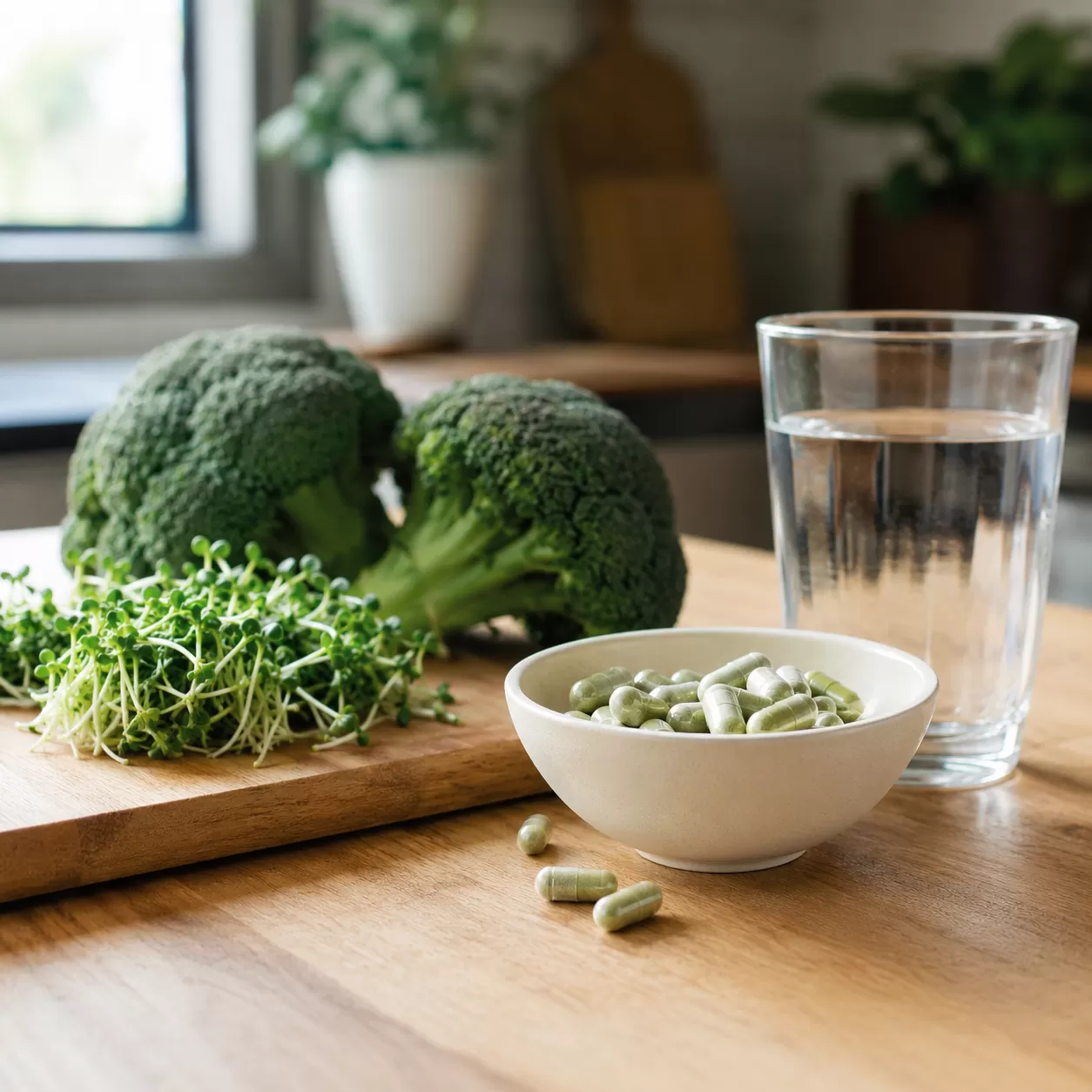
Recommended sulforaphane dosage & timing
For most adults in the U.S., a smart starting point is:
-
Dose:
- Beginner: 10–20 mg sulforaphane (or 50–100 mg glucoraphanin + myrosinase) per day
- More advanced: up to 40–60 mg sulforaphane per day, if well tolerated
-
Timing for better absorption:
- Take your organic sulforaphane supplement on a light stomach:
- Either 15–30 minutes before a meal, or
- 2–3 hours after eating
- Drink with water, not soda or alcohol.
- If it’s a stabilized sulforaphane capsule, follow the label exactly—these are usually designed for once-daily use.
- Take your organic sulforaphane supplement on a light stomach:
If you’re sensitive, split the dose: half in the morning, half in the afternoon.
Simple cycling for beginners vs. long‑term users
To keep your Nrf2 activator response balanced, I usually recommend:
-
Beginners (first 8–12 weeks):
- 5 days on, 2 days off (ex: Monday–Friday on, weekend off)
- Or every other day if you’re sensitive or prone to detox reactions
-
Long‑term users (after 3 months):
- 3–6 days per week, depending on how you feel
- Optional breaks: 1 week off every 2–3 months to “reset” and see if you still notice benefits
This cycling works well with both broccoli sprout supplements and glucoraphanin supplements with myrosinase.
What to expect: 2–4 weeks vs. later
Everyone’s different, but based on real sulforaphane supplement reviews, here’s what many people report:
-
First 2–4 weeks:
- Mild digestive changes (more gas, softer stools) as your detox and gut bacteria adjust
- Slight increase in energy or “cleaner” focus
- Sometimes mild headache or fatigue on high doses—usually from ramped‑up detox (back off the dose if needed)
-
4–12 weeks and beyond:
- More consistent energy and mental clarity (less brain fog)
- Subtle support for inflammation, joint comfort, and everyday recovery
- Some notice clearer skin and better overall resilience during stress or seasonal immune challenges
If you don’t notice anything after 8–12 weeks, check your sulforaphane dosage, product quality, and diet before deciding it “doesn’t work.”
Stacking sulforaphane with other healthy habits (without overcomplicating it)
You don’t need a perfect routine. Just lock in a few basics so your organic broccoli sprouts supplement can actually shine:
-
Diet:
- Eat real food most of the time: lean protein, healthy fats, veggies, and fiber
- Add natural sulforaphane foods a few times a week: broccoli sprouts, kale, cabbage, arugula
- Go easy on ultra‑processed foods and sugar, which drive inflammation
-
Exercise:
- Aim for 20–30 minutes of movement most days (walks, light strength training, cycling)
- Nrf2 activation + movement = better detox and antioxidant support
-
Sleep & stress:
- Shoot for 7–9 hours of sleep; sulforaphane works better when recovery is on point
- Use simple stress tools: short walks, deep breathing, or 5–10 minutes of quiet time daily
-
Keep it simple:
- Start with one organic sulforaphane supplement you trust
- Add other supplements only if you need them—don’t build a 15‑pill routine you won’t stick to
Consistent, daily use with these basics is what actually delivers the sulforaphane benefits you’re looking for: detox support, antioxidant protection, and better day‑to‑day performance.
Potential Side Effects of an Organic Sulforaphane Supplement
Most people in the U.S. do well with an organic sulforaphane supplement, especially when it’s coming from clean organic broccoli sprouts. Still, it’s smart to know what to expect and when to loop in your doctor.
Mild Digestive Issues (and How to Minimize Them)
A broccoli sprout supplement or glucoraphanin supplement can cause mild, short-term gut changes for some people:
- Gas, bloating, or softer stools
- A light “detox” feel as your body ramps up sulforaphane detox pathways
To dial this down:
- Start low: Begin with half the suggested sulforaphane dosage for 3–5 days.
- Take with food: A small meal or snack makes it easier on your stomach.
- Stay hydrated: Helps your system handle the increased antioxidant and Nrf2 activator activity.
If stomach issues last longer than a week or feel intense, pause and talk with your healthcare provider.
Who Should Talk to a Doctor First
Even the best sulforaphane supplement isn’t for everyone. Get medical advice first if you:
- Are pregnant, trying to conceive, or breastfeeding
- Take meds for thyroid, blood thinners, blood pressure, or diabetes
- Have a history of kidney, liver, or serious GI issues
- Are dealing with autoimmune disease, cancer treatment, or complex health conditions
In these cases, your doctor can help decide if a stabilized sulforaphane or Nrf2 activator fits safely with your plan.
How to Track Your Own Results Safely
To see if an organic sulforaphane supplement is actually helping, keep it simple:
- Pick 1–2 goals: Less brain fog, better energy, fewer aches, clearer skin, or calmer digestion.
- Use a quick log: Rate your sleep, focus, and daily inflammation or pain (1–10) for 3–4 weeks.
- Watch for side effects: New headaches, nausea, or ongoing gut issues mean you should cut back or stop.
If you’re in the U.S. and adding sulforaphane for inflammation, antioxidant support, or general wellness, treat it like any strong wellness tool: start slow, pay attention, and loop in your doctor when anything feels off.
Is an Organic Sulforaphane Supplement Right for You?
Quick checklist: should you take an organic sulforaphane supplement?
You’re a good fit for an organic sulforaphane supplement if:
- You want general wellness support and easier daily detox (liver, glutathione, antioxidants).
- You deal with brain fog, low energy, or focus issues and want a clean, non-stimulant option.
- You’re looking for natural inflammation support (joint stiffness, recovery, everyday aches).
- You rarely eat fresh organic broccoli sprouts but still want sulforaphane benefits.
- You care about clean-label, organic, non-GMO products with no sketchy fillers.
You may want to wait or talk to your doctor first if:
- You’re pregnant, breastfeeding, or on prescription meds (especially for thyroid, blood sugar, or blood thinners).
- You have a sensitive stomach and don’t tolerate cruciferous veggies well.
- You expect it to be a “miracle cure” instead of one tool in a bigger healthy routine.
Top-tier sulforaphane supplement types that actually deliver
Based on real-user feedback and what I see working in the U.S. market, the best sulforaphane supplement options are:
-
Stabilized sulforaphane capsules
- Ready-made sulforaphane, not just “broccoli powder.”
- Great for people who want predictable, higher bioavailability and simple dosing.
-
Glucoraphanin + myrosinase combos (broccoli sprout supplement)
- Uses glucoraphanin (the precursor) plus myrosinase (the enzyme) so your body can produce sulforaphane in the gut.
- Look for organic broccoli sprouts, clearly stated sulforaphane yield, and third-party testing.
For my own products, I stick to:
- Certified organic, U.S. and EU-compliant ingredients
- Tested for sulforaphane output, heavy metals, and purity
- No magnesium stearate, artificial colors, or “proprietary blends” hiding the real dose
How I’d use an organic sulforaphane supplement in real life
Here’s my honest advice if you’re in the U.S. and thinking about adding sulforaphane:
-
Start simple
- Begin with the lowest effective dose on the label once per day with food.
- Don’t stack five new supplements at once—give this one 2–4 weeks on its own.
-
Stay consistent
- Sulforaphane is about steady Nrf2 activation, not a one-time “detox.”
- Take it at the same time daily (morning or with your first meal works well for most people).
-
Listen to your body
- Track basic things: energy, digestion, focus, sleep, recovery, skin, and mood.
- If you feel gassy or off, cut the dose in half or take it every other day.
- If you notice no change after 6–8 weeks, it may not be your best spend—reallocate that budget.
If you want a quick decision rule:
- You want clean, passive support for detox, inflammation, and brain fog →
Yes, an organic sulforaphane supplement is worth trying. - You want a cure-all or instant results →
No supplement, including sulforaphane, will do that.
Bottom line: pick a high-quality organic sulforaphane supplement, keep it simple, use it consistently, and let real-world results—not hype—decide if it earns a permanent spot in your routine.
Related Articles
Related Articles
Related Articles
What the regulators say
“Dietary supplements can help you improve or maintain your overall health, and some may help you meet your daily nutrient needs — but taking some can also pose risks, especially if you have certain medical conditions or take certain medications.”
Reference point: The NIH ODS sets the tolerable upper intake level for zinc at 40 mg per day for adults. (NIH ODS)
For the reference values and safety ceilings cited above, verify against the NIH Office of Dietary Supplements and the U.S. FDA. Neither body endorses any specific brand.
Explore more in our Best Seller collection.
Related Articles
Related Articles
Related Products
Clinically-formulated q'ankyaq supplements to support your goals.


Oregano Oil with Black Seed Oil Organic Gummies for Kids and Adults with Immune Support


