
Broccoli Sprouts Organic Seeds Guide to Growing Superfood
If you’re looking into broccoli sprouts organic seeds, you’re already ahead of the curve.
Part of the q'ankyaq Gut Health Hub — explore the complete guide.
You’ve heard the buzz about sulforaphane, detox support, and “superfood” sprouts that you can grow right on your kitchen counter… but what actually makes one organic broccoli sprout seed better than another? And how do you avoid wasting money on low‑quality seeds that barely germinate?
In this guide, you’ll see exactly how to choose high‑quality organic seeds for sprouting, why non‑GMO, certified organic broccoli sprout seeds matter for your health, and how brands like Q‘ankyaq are raising the bar with clean, lab‑tested seed lots.
If you want reliable sprouting, maximum nutrition, and zero guesswork, you’re in the right place.
Why Choose Organic Broccoli Sprout Seeds?
If you’re going to eat broccoli sprouts for their health benefits, the seeds you start with matter. A lot. I only use organic broccoli sprout seeds because I want clean food, strong nutrition, and zero question marks about what I’m putting in my body.
What Are Organic Seeds and Why They Matter
Organic sprouting seeds are grown without synthetic chemicals or genetic modification. That means:
| Type | Organic Broccoli Sprout Seeds | Conventional Seeds |
|---|---|---|
| Pesticides/Herbicides | No synthetic pesticides | Often used in growing & storage |
| GMO Status | Non-GMO by standard | May come from GMO crops |
| Environmental Impact | Soil-friendly, pollinator-friendly | Higher chemical runoff & soil stress |
| Seed Treatment | No chemical coatings or fungicide dips | May be treated with chemicals |
When I’m sprouting seeds in a jar on my kitchen counter, I don’t want residues from farm chemicals soaking into the water I’m rinsing and drinking off the sprouts. Organic seeds for sprouting cut that risk way down.
Health Benefits of Broccoli Sprouts
Broccoli sprouts are one of the most nutrient-dense foods you can grow at home. They’re especially valued for:
-
Sulforaphane – the star compound:
- Supports natural detox pathways
- Linked to cellular protection and healthy inflammation response
- Antioxidants – help fight oxidative stress
- Vitamins – especially vitamins C, K, and some B vitamins
- Minerals – like potassium, calcium, and iron
- Plant compounds – glucoraphanin and other phytonutrients
Fresh, homegrown broccoli sprouts nutrition is hard to beat: they deliver concentrated benefits compared to mature broccoli, in just a few days of growth.
Organic vs. Conventional Sprouting Seeds
When it comes to broccoli sprouts health benefits, the seed source directly affects:
-
Quality
- Organic: selected for food use and sprouting
- Conventional: often bred for large-scale farming, not indoor sprouting
-
Safety
- Organic sprouting seeds: grown and handled under food-grade, organic protocols
- Conventional: may have higher risk of chemical residues
-
Environmental Impact
- Organic: supports sustainable farming and soil health
- Conventional: often relies on synthetic fertilizers and pesticides
If you’re eating the seed’s first few days of life, going organic broccoli sprout seeds is the smarter, safer play.
How Q‘ankyaq Ensures Organic Certification and Purity
With Q‘ankyaq organic broccoli sprout seeds, I built everything around trust and traceability for the US market:
-
Certified Organic & Non-GMO
- Third-party organic certification
- Non-GMO seed stock only
-
Seed Purity & Identity
- Single-variety, true broccoli sprout strain
- Regular lab checks for purity and germination rate
-
Food-Grade Handling
- Stored and packed in clean, food-safe conditions
- No chemical seed treatments, coatings, or additives
-
Transparent Sourcing
- Partner farms using sustainable, eco-friendly practices
- Clear labeling: organic sprouting seeds, not generic garden seed
If you want premium organic sprout seeds that you can eat raw with confidence, seed purity and certification aren’t “nice to have” — they’re the baseline. That’s exactly what I optimize for with Q‘ankyaq.
Health benefits of organic broccoli sprouts
When I grow and eat organic broccoli sprout seeds, I’m doing it for the nutrition and the sulforaphane hit. These tiny sprouts pack way more punch than mature broccoli.
Broccoli sprouts nutrition at a glance
Broccoli sprouts are low-calorie, but extremely dense in key compounds:
| Nutrient / Compound | What it does for you |
|---|---|
| Sulforaphane | Supports detox, cell protection, and anti-cancer paths |
| Vitamin C | Immune support, collagen, antioxidant |
| Vitamin K | Bone health, normal blood clotting |
| Folate | Cell repair, heart and brain support |
| Potassium | Blood pressure and muscle support |
| Fiber | Gut health and steady blood sugar |
| Antioxidants | Help fight oxidative stress and inflammation |
Organic broccoli sprout seeds (especially when grown fresh at home) typically deliver much higher sulforaphane levels than store-bought broccoli or pre-cut veggies.
Science-backed health benefits
Researchers in the U.S. and worldwide keep coming back to broccoli sprouts sulforaphane because it’s so active in the body:
-
Detox support:
Human studies show broccoli sprouts can boost phase II detox enzymes, helping the body clear out pollutants and everyday toxins more efficiently. -
Anti-inflammatory support:
Sulforaphane has been shown to reduce key inflammatory markers linked to joint issues, metabolic problems, and long-term disease risk. -
Cell and DNA protection:
Studies suggest broccoli sprouts can help protect cells from oxidative damage, supporting long-term heart and brain health.
That’s why I focus on organic seeds for sprouting: no pesticide residue, better peace of mind when I’m eating them raw.
Easy ways to eat more broccoli sprouts
In a U.S. kitchen, I want simple, fast options. Here’s how I use homegrown broccoli sprouts most days:
-
Salads:
- Toss a big handful on top of any salad
- Mix with microgreens for extra crunch
-
Smoothies:
- Add ¼–½ cup to green smoothies
- Pair with berries, banana, and a clean protein powder
-
Sandwiches & wraps:
- Use sprouts instead of lettuce on turkey, chicken, or veggie sandwiches
- Load into wraps, burgers, and breakfast sandwiches
-
Bowls & tacos:
- Sprinkle on grain bowls, poke bowls, or tacos right before serving
The key is no cooking—heat can reduce sulforaphane, so I always add sprouts at the end.
What health experts say
Health professionals in the U.S. are paying close attention to organic broccoli sprout seeds and sprouts:
- Many functional medicine doctors call broccoli sprouts “one of the most powerful everyday foods” for cellular protection.
- Nutrition-focused MDs often recommend a small daily serving of broccoli sprouts instead of buying expensive “detox” products.
- Dietitians specializing in cancer prevention routinely highlight broccoli sprouts as a top source of sulforaphane you can grow at home.
That’s exactly why I put so much effort into offering premium organic sprout seeds—if I’m eating these raw several times a week, I want them clean, potent, and consistent every single batch.
How to Source High-Quality Organic Broccoli Sprout Seeds
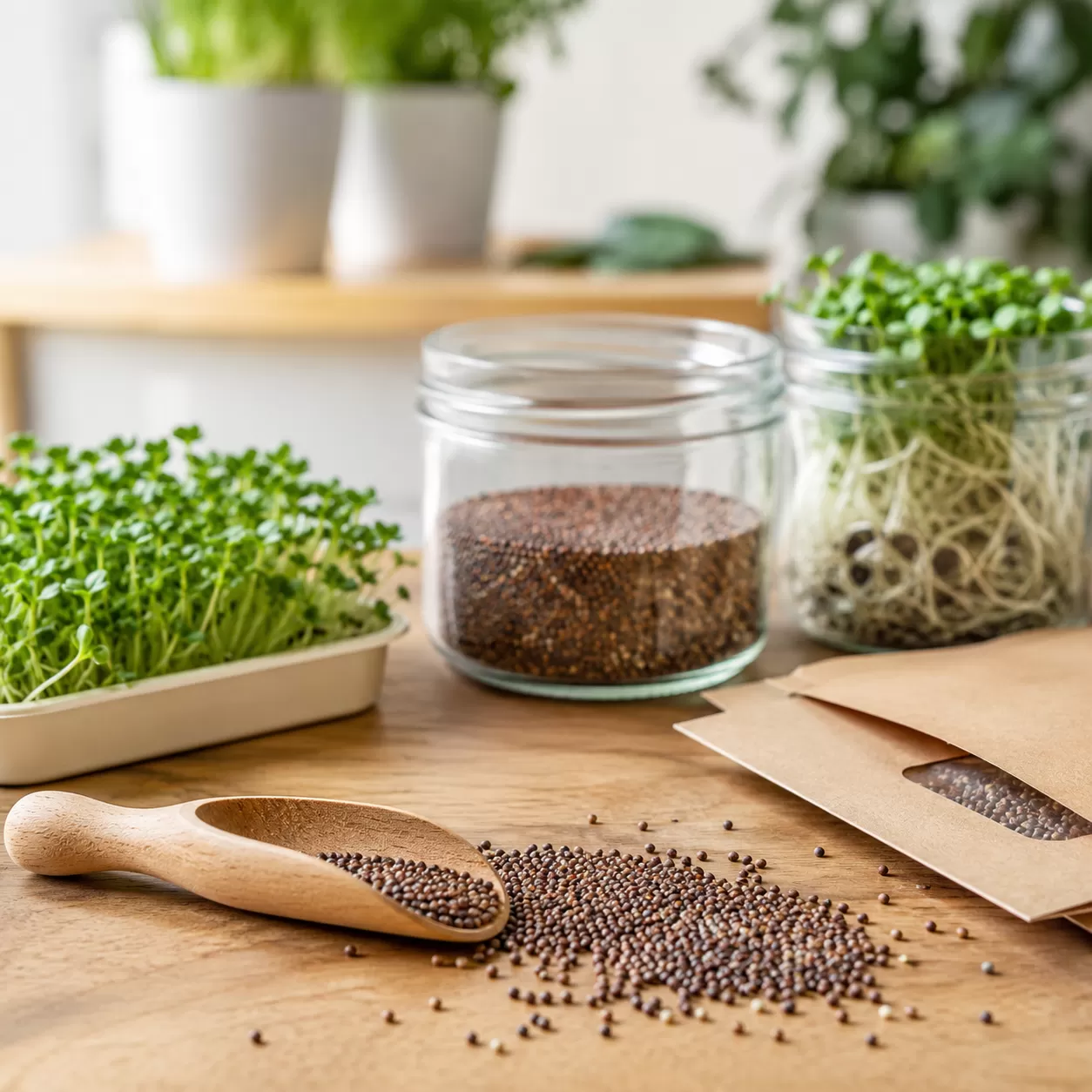
How to pick a trustworthy seed supplier
When I buy organic broccoli sprout seeds, I look for a few non‑negotiables:
- USDA Organic certification (logo clearly shown, certificate number if possible)
- Non-GMO statement that’s specific to sprouting or microgreen seeds
- Clear germination rate (ideally 90%+ for sprouting)
- Detailed product page: origin, lot number, best-by date, and how the seeds are cleaned
- Lots of verified reviews that mention sprouting success, not just gardening in general
- Basic transparency: real contact info, clear return policy, and responsive customer support
If a brand is serious about organic seeds for sprouting, they make this info easy to find.
Why Q‘ankyaq organic broccoli sprout seeds stand out
With Q‘ankyaq organic broccoli sprout seeds, I’ve focused on three things U.S. customers care about: safety, consistency, and sustainability.
- Certified organic & non-GMO: Every batch is sourced from certified organic farms and documented for non-GMO status.
- Lab-tested for purity: Lots are tested for germination rate and screened for common contaminants so you get clean, reliable organic sprouting seeds.
- Optimized for sprouting: We select seed lots specifically for broccoli sprouts and microgreens, not just general field planting, which means strong, fast, even germination at home.
- Sustainably sourced: We work with growers that use soil-friendly and water-conscious farming practices, aligning with the push for sustainable sprouting seeds in the U.S.
Red flags when buying broccoli sprout seeds
I avoid a supplier if I see:
- No organic certification anywhere on the label or listing
- Vague claims like “natural” or “clean” with no proof
- No mention that the seeds are suitable as sprouting seeds or microgreen seeds
- No lab testing, no germination rate, or no batch/lot info
- A mix of seeds sold as “sprout mix” without clear ingredients
If you can’t verify how the seeds are grown and tested, they’re not worth the risk.
Price and value for money
With premium organic sprout seeds, I don’t chase the lowest price—I look at cost per ounce and per tray/jar:
- Slightly higher prices on certified organic, lab-tested seeds usually pay off in:
- Better germination (less waste)
- Cleaner sprouts (less risk and less rinsing stress)
- Stronger flavor and broccoli sprouts nutrition
For Q‘ankyaq, I price our best organic sprout seeds to balance quality and value: you’re paying for verified organic sourcing, lab testing, and consistent results, not just a fancy label.
Step-by-step guide to growing broccoli sprouts at home
Growing broccoli sprouts from organic seeds at home is simple, fast, and doesn’t take much space. Here’s exactly how I do it with Q‘ankyaq organic broccoli sprout seeds.
Materials you’ll need
You don’t need a fancy setup. Just:
- Organic broccoli sprout seeds (non-GMO, sprouting-grade – I use Q‘ankyaq)
- Wide-mouth glass jar or sprouting tray
- Sprouting lid or fine mesh + rubber band
- Clean, filtered water
- Dish rack or counter space with indirect light
- Optional: tray and paper towel if you prefer the microgreen style
How to grow broccoli sprouts (timeline)
Day 0 – Soak
- Add 2–3 tablespoons of organic broccoli sprouting seeds to a clean jar.
- Cover with at least 4x water (they swell).
- Soak for 6–8 hours at room temp (around 68–75°F).
- Drain the water through the sprouting lid and rinse once.
Day 1–3 – Rinse and sprout
- Rinse and drain 2–3 times per day (morning and evening is usually enough).
- Keep the jar tilted upside down at an angle to let excess water drain and air flow in.
- Store in a cool, shaded spot – no direct sun yet.
- You’ll see tiny white tails in 24–36 hours.
Day 3–5 – Green up and harvest
- Once sprouts are 1–2 inches long and showing little green leaves, they’re ready.
- Move them to indirect light (kitchen counter near a window works) for 4–12 hours to green up.
- Give one last rinse, drain well, and store in the fridge in a breathable container.
- You can harvest anytime from day 3 to day 5 depending on how crunchy you like them.
Ideal growing conditions
For the best broccoli sprout germination:
- Temperature: 65–75°F (normal room temp in most U.S. homes)
- Humidity: Moderate; avoid steamy kitchens or bathrooms
- Light: Low light while sprouting, indirect light only when you want them to green up
- Airflow: Good ventilation; don’t let jars sit in a closed, damp cabinet
Common mistakes to avoid
To keep your homegrown broccoli sprouts clean and safe:
-
Overwatering / standing water
- Make sure the jar is well drained after each rinse.
- Don’t leave water pooled at the bottom.
-
Poor air circulation
- Don’t pack jars too full; use fewer seeds or an extra jar if needed.
-
Contamination
- Always start with clean jars and filtered water.
- If sprouts smell off, slimy, or look fuzzy, toss them.
-
Too much heat
- Avoid putting jars near stoves, dishwashers, or sunny windowsills.
Why Q‘ankyaq organic broccoli sprout seeds are easier to grow
I designed Q‘ankyaq organic broccoli sprout seeds specifically for reliable home sprouting:
- High germination rate: Each batch is lab-tested for strong, even sprouting so you get dense, uniform broccoli sprouts every time.
- Sprouting-grade and organic: Certified organic, non-GMO, and pathogen-tested so you’re not guessing about safety.
- Clean seed size and purity: Minimal debris and consistent seed size help reduce mold risk and make rinsing and draining simpler.
If you keep the basics tight—clean jar, good seeds, rinse/drain daily—you’ll consistently get fresh, crunchy organic broccoli sprouts at home in under a week.
Troubleshooting Broccoli Sprouts at Home
Common Problems With Broccoli Sprouts (And Fixes)
Here’s how I handle the most common issues when growing organic broccoli sprout seeds at home:
Mold on sprouts
- Causes: Poor airflow, too much moisture, dirty jars/trays, warm rooms.
-
Fix it:
- Rinse 2–3 times a day with cool, clean water.
- Drain fully (no standing water).
- Use a tilted jar or ventilated tray for airflow.
- Keep room temp around 65–72°F.
- Sanitize jars/trays between batches.
- If you see fuzzy white growth that smells bad or looks slimy, toss the batch and start over.
Low germination (seeds not sprouting well)
- Causes: Old seeds, poor-quality seed, bad storage, or too-cold temps.
-
Fix it:
- Use fresh, lab-tested organic seeds (like our Q‘ankyaq batches).
- Store seeds in a cool, dry place, ideally in an airtight bag or jar.
- Keep sprouting temp around 65–75°F.
- Soak seeds 6–8 hours only; longer soaking can suffocate them.
Bitter taste
- Causes: Overgrown sprouts, heat stress, not rinsed enough.
-
Fix it:
- Harvest around 3–5 days, when they’re about 1–2 inches.
- Rinse well before eating to wash off seed hulls and sulfur notes.
- Keep them out of direct hot sunlight; use indirect light.
Our Q‘ankyaq organic broccoli sprout seeds are bred for high germination and consistent flavor, so if your process is on point, they stay mild and fresh-tasting.
FAQs About Organic Broccoli Sprout Seeds
How long do broccoli sprouts take to grow?
- Typically 3–5 days from soak to harvest.
- In cooler rooms, they may take 6–7 days; in warmer rooms, closer to 3–4 days.
Are organic seeds harder to grow?
- No. Organic sprouting seeds are not harder to grow; if anything, good organic seed lots are:
- Cleaned better
- Tested for germination
- Free of chemical residue
With Q‘ankyaq, you get non-GMO, organic, and lab-tested seeds, so sprouting is straightforward if you follow basic rinsing and draining steps.
Can I eat broccoli sprouts raw?
- Yes, most people eat raw broccoli sprouts in salads, sandwiches, and smoothies.
- If you’re immune-compromised, talk with your doctor or lightly steam them.
Do I need special sprouting equipment?
- Not really. You can use:
- A mason jar + sprouting lid, or
- A sprouting tray
Just make sure there’s drainage and airflow.
Scaling Up: Bigger Batches of Homegrown Broccoli Sprouts
If you want larger yields of homegrown broccoli sprouts for your household:
-
Start with a plan
- Decide how much you actually eat per week (for most U.S. households, that’s 2–4 cups of sprouts).
- Stagger batches every 1–2 days so you always have a fresh tray ready.
-
Use larger trays or multiple jars
- For bigger families:
- Run 2–3 jars at once, or
- One 10x20 sprouting tray for larger harvests.
- Don’t overcrowd seeds; too many in one jar = more moisture and mold risk.
- For bigger families:
-
Stick with high-quality organic sprouting seeds
- Cheap seed with poor germination will waste your time and water.
- Our Q‘ankyaq premium organic sprout seeds are:
- Sustainably sourced
- Lab-tested for germination rates
- Designed for consistent production when you scale up
By dialing in rinsing, drainage, and room temperature, you can reliably grow nutrient-dense broccoli sprouts at home every week with minimal hassle.
Related Articles
Related Articles
Related Articles
What the regulators say
“The FDA does not approve dietary supplements for safety and effectiveness before they reach the market.”
Reference point: For adults, the NIH ODS lists 4,000 IU (100 mcg) per day as the upper limit for vitamin D. (NIH ODS)
For the reference values and safety ceilings cited above, verify against the NIH Office of Dietary Supplements and the U.S. FDA. Neither body endorses any specific brand.
Frequently Asked Questions
What are dietary supplements?
Dietary supplements are products intended to add nutrients to your diet - including vitamins, minerals, herbs, amino acids, and enzymes in forms like gummies, capsules, liquids, or powders. They support wellness but are not a substitute for a balanced diet or medical care.
How do I choose the right supplement?
Identify your goal, then read the Supplement Facts label for form, dosage, and active ingredients. Consider third-party testing, your diet, and any medications. A registered dietitian can help personalize choices.
How do focus supplements work?
Ingredients like choline and sulforaphane-supporting compounds aid normal neurotransmitter and cognitive function. They are supportive, not stimulants.
Are focus gummies safe for teens?
Use products formulated for the appropriate age and follow serving sizes. Consult a pediatrician before giving teens any new supplement.
What nutrients support memory and focus?
Choline, omega-3s, and certain B vitamins are commonly associated with healthy cognitive function.
Explore more in our Best Seller collection.
Related Articles
Related Articles
Related Products
Clinically-formulated q'ankyaq supplements to support your goals.


Oregano Oil with Black Seed Oil Organic Gummies for Kids and Adults with Immune Support


